
ZeBeyond Simulation
The Challenge
Transforming complexity into intuitive, performant action.
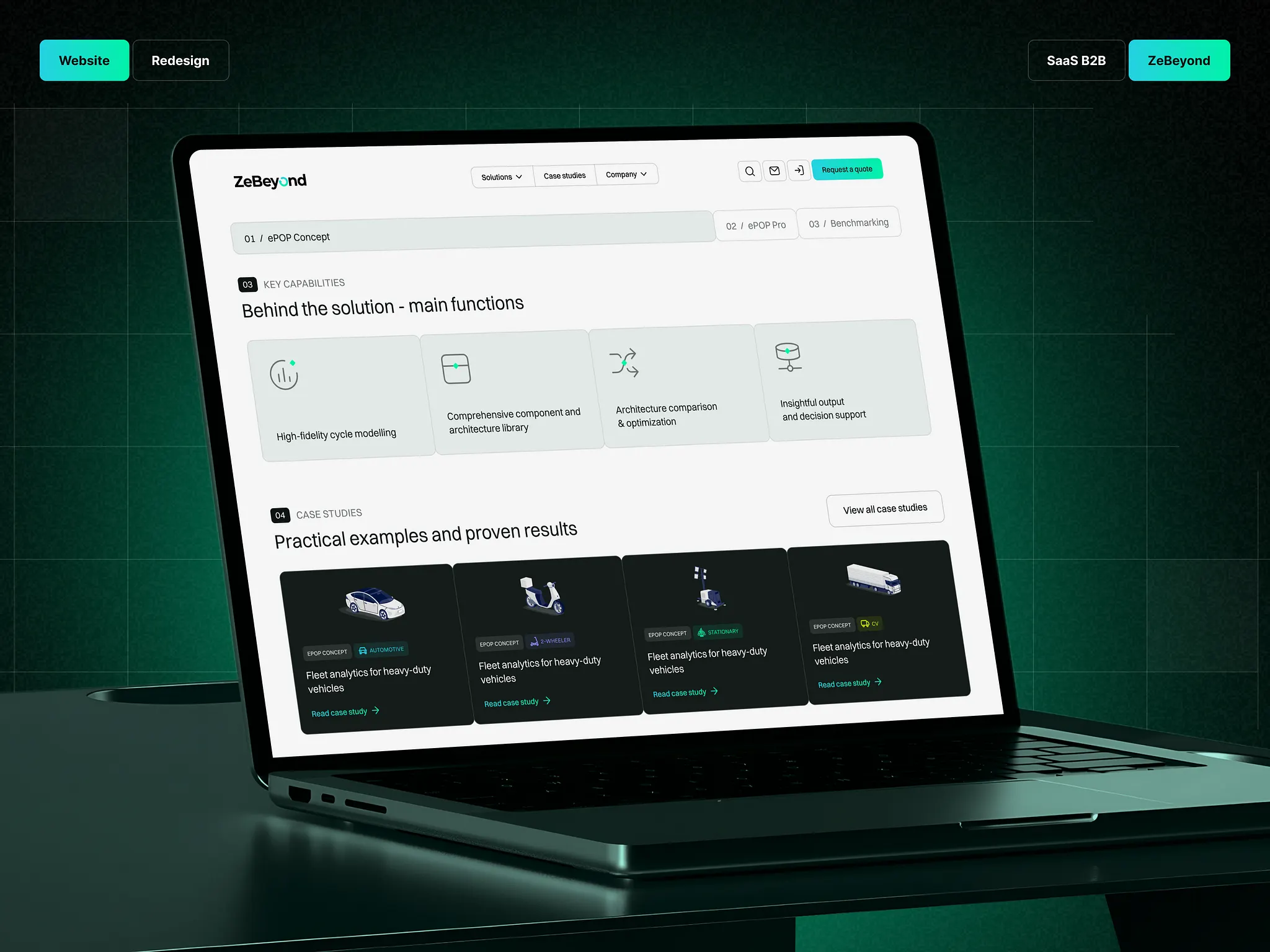
ZeBeyond connects material data with system-level performance, allowing teams to virtually test electric, hybrid, and conventional vehicle architectures. Engineers can compare efficiency, cost, weight, and environmental impact across hundreds of configurations in one place. The UX focuses on clarity and structure, translating complex engineering data into a navigable, decision-friendly interface that works for both technical users and business stakeholders.
The Solution
Art-directed styling meet enterprise structural scale.
We designed a complete dashboard redesign built on absolute visual clarity and structured capabilities sections. By organizing complex simulation workflows, creating end-to-end concept visualizations, and engineering seamless touch-friendly interfaces, we reduced cognitive load and enabled stakeholders to evaluate performance instantly.
Case Studies Built for Decision-Making
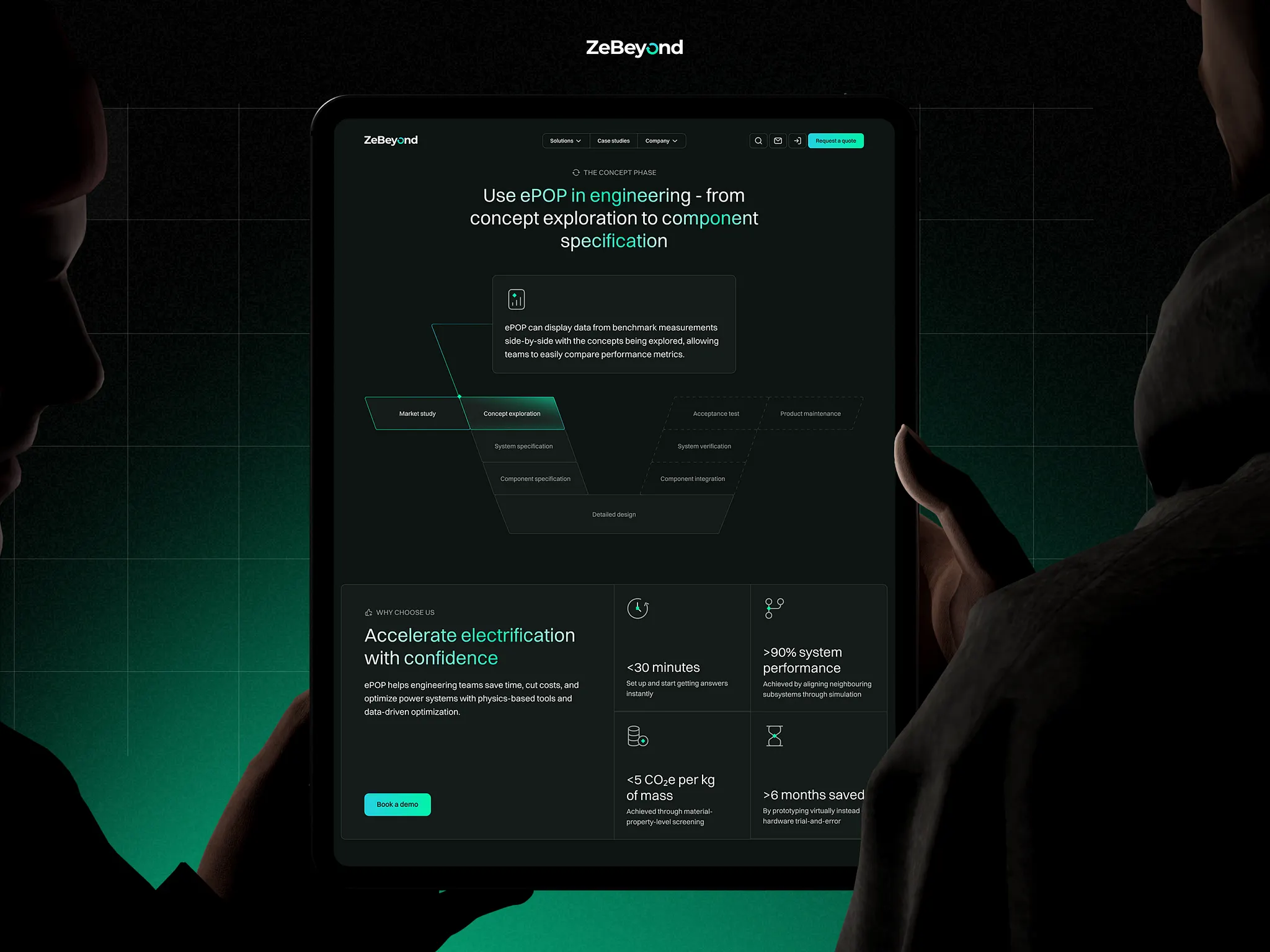
To help users quickly understand real-world impact, we designed a structured Case Studies section that turns complex engineering work into clear, scannable stories. Each case highlights the challenge, simulation approach, and measurable results, allowing engineers and decision-makers to evaluate outcomes without digging through dense technical material. Industry filters, consistent layouts, and visual cues make it easy to compare projects across use cases and vehicle types. This feature strengthens credibility, supports sales conversations, and helps users connect ZeBeyond’s technology to practical business and engineering value.
End-to-End Engineering Workflow Visualization
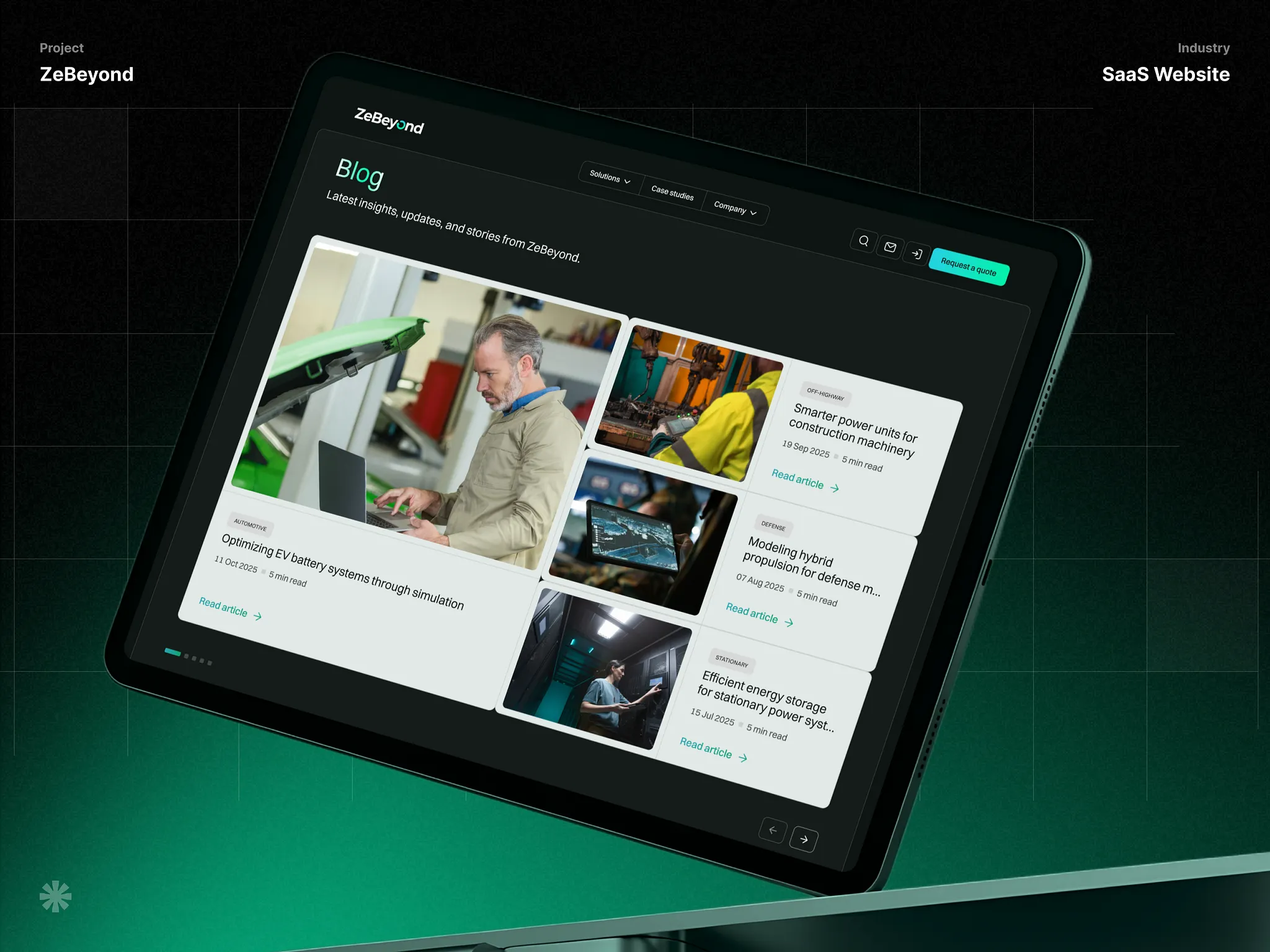
We designed an interactive workflow that shows how ePOP supports engineers from early concept exploration to component specification. Each phase is clearly mapped, helping users understand where the platform fits into their development process and how virtual testing replaces costly trial-and-error. By visualizing the engineering lifecycle step by step, the feature turns a complex methodology into an intuitive experience. Engineers can quickly see when to benchmark, compare architectures, and validate performance, while decision-makers gain confidence in how simulation accelerates development, reduces risk, and supports electrification goals.
Insight-Driven Engineering Blog
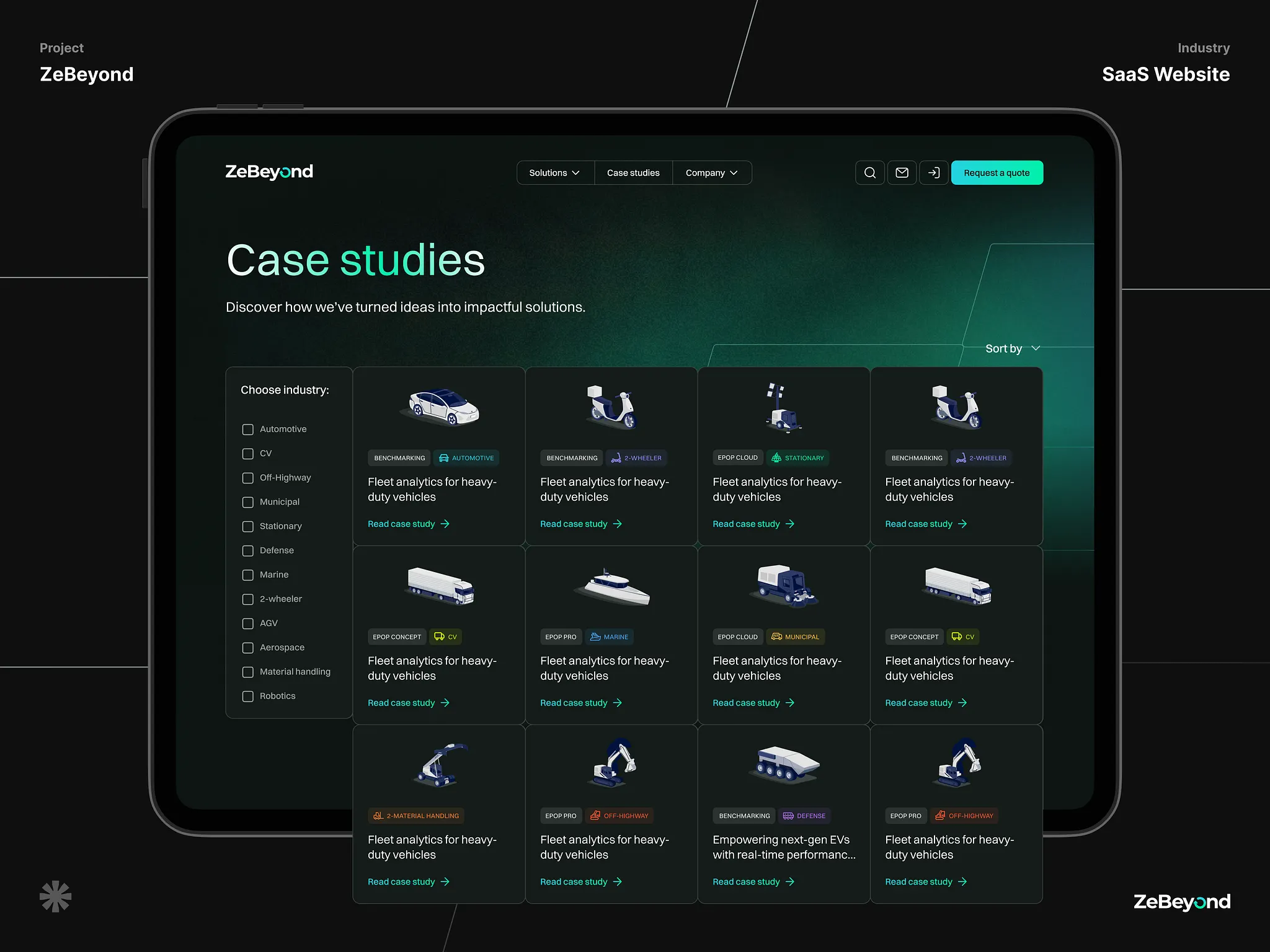
We designed the blog as a knowledge hub that translates complex engineering topics into clear, practical insights. Articles cover simulation methods, electrification trends, and real-world use cases, helping engineers stay informed while giving decision-makers a broader market and technology perspective. Clean card layouts, readable typography, and consistent tagging make content easy to scan and explore. The blog supports thought leadership, improves SEO, and builds long-term trust by positioning ZeBeyond as a credible voice in advanced powertrain engineering and system simulation.
Seamless Mobile Experience for On-the-Go Decisions
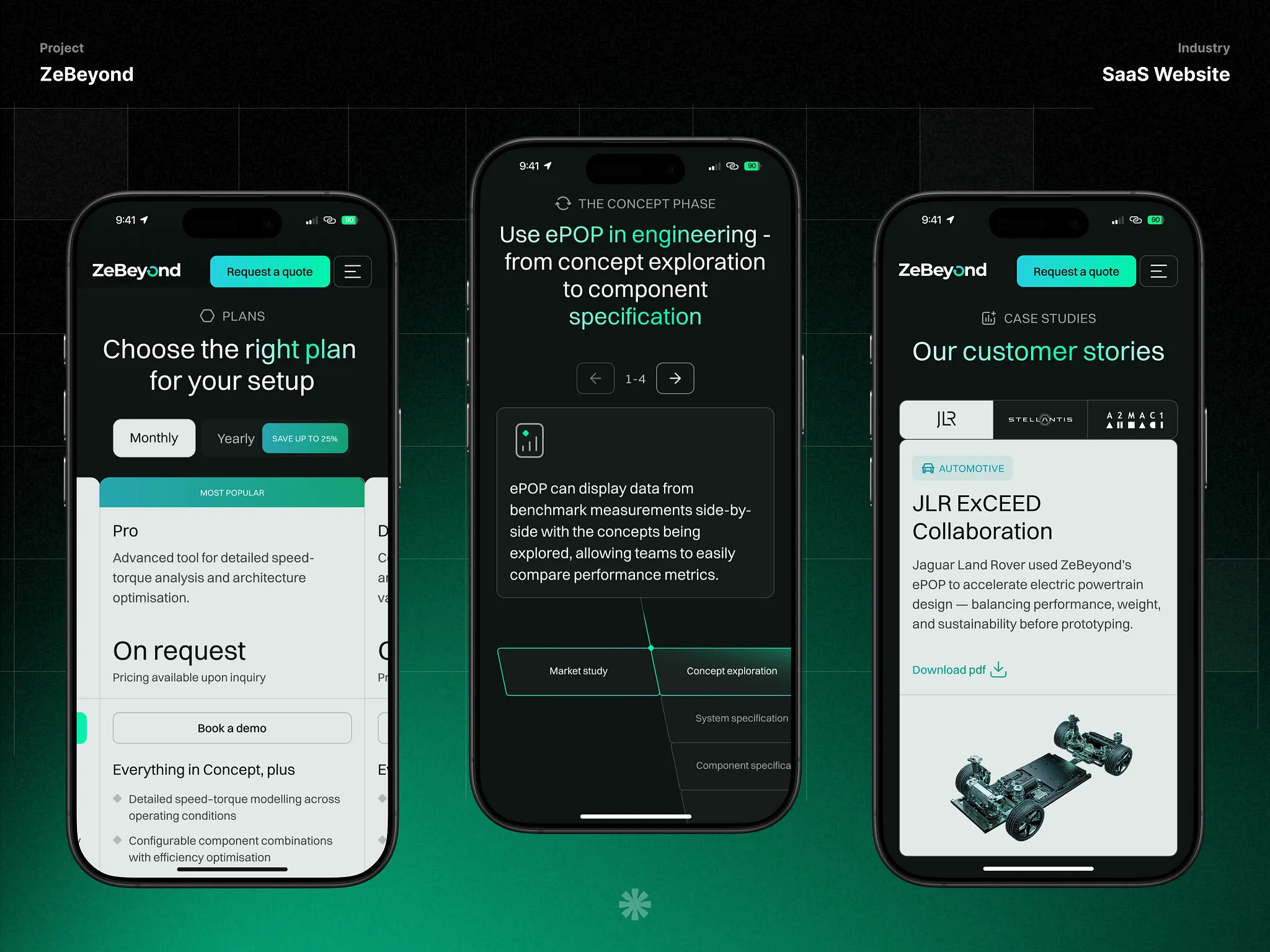
We designed the mobile experience to preserve clarity and functionality across smaller screens without sacrificing depth. Key sections, including capabilities, case studies, and pricing, adapt into clean, touch-friendly layouts that support quick scanning and effortless navigation. Responsive components, simplified hierarchies, and prioritized content ensure that engineers and decision-makers can explore ZeBeyond anytime, whether reviewing features, comparing plans, or requesting a demo. The mobile experience supports flexibility, keeps engagement high, and extends the product’s reach beyond the desktop workflow.
Clear Capabilities for Faster Evaluation
To help users quickly understand what powers the platform, we designed a structured capabilities section that breaks complex engineering functionality into clear, digestible blocks. Each capability highlights a core function of ePOP, from high-fidelity cycle modeling to architecture comparison and decision support, making it easy to grasp both technical depth and practical value. This layout supports fast scanning for decision-makers while giving engineers confidence in the system’s robustness. By clearly mapping features to outcomes, the section reduces cognitive load, shortens evaluation time, and helps teams move from interest to action with clarity.
Browse other concepts
View all works
Personal Branding – AX
A clean, premium personal visual identity transformation and personal branding design system built on custom geometric ambigram marks, deep dark tones, and vibrant red accents.
PolicyPilot Landing Page
A conversion-focused promo website built to present a powerful B2B insurance admin platform with absolute clarity, spacious modular layouts, and trustworthy styling.
Have something meaningful to build?
We partner with teams who care about craft. Let's talk about what you're building.